














The Power of Staying in Touch at Camp
Most summer camps enforce no-technology rules which means for many young campers, this is the first time they've been away from home without a phone in their pocket. That's not a problem. That's the point. And it's exactly where camp stationery earns its place on the packing list.
Letter writing at camp is a two-way connection. Campers who write home feel grounded and remembered. Parents who receive a postcard with their child's handwriting on it—however brief—get something no text message can deliver. Camp experts have long noted that the act of writing itself is good for kids: it builds narrative thinking, strengthens memory, and gives campers a healthy way to process everything they're experiencing. A postcard is easy. A stationery set opens the door to something a little richer. Both matter.
Personalizing Camp Stationery: Choosing the Right Items
Not every camper is going to fill pages of a notepad. And that's fine. That's why we carry options for every writing style, from the kid who dashes off a quick postcard to the one who settles in with a full stationery set during quiet time.
Camp postcards are the easiest entry point. They're small, fast, and require almost no effort—which makes them the most likely to actually get sent. Our Postcard 6-Pack gives campers a ready-to-go supply that doesn't feel like homework.
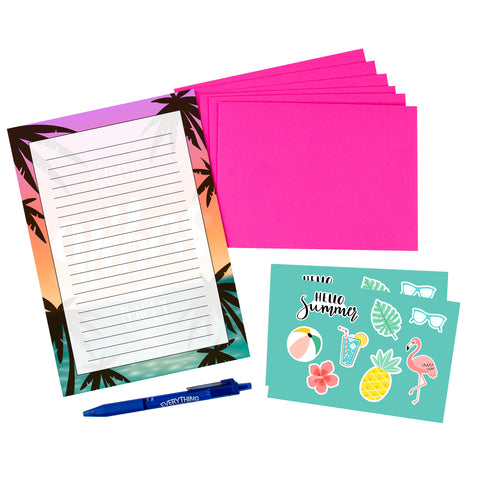
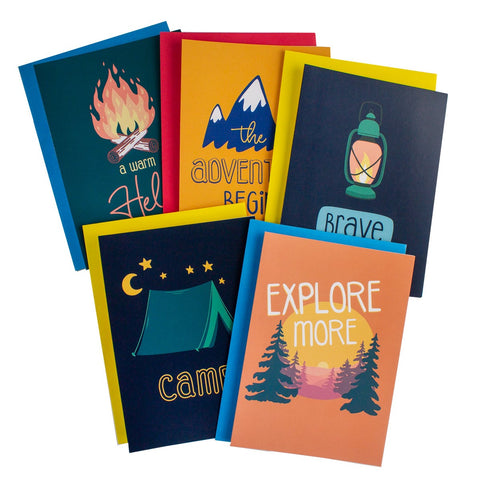
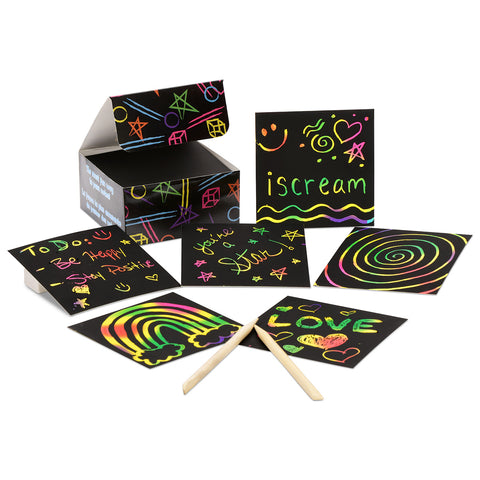
Camp stationery sets like our ESC Camp Stationery Set are great for campers who like to write a little more, or for parents who want to send something fun and personal to their child at camp. Themed cards, greeting cards, and scratch notes make the whole correspondence experience feel less like an obligation and more like an event.
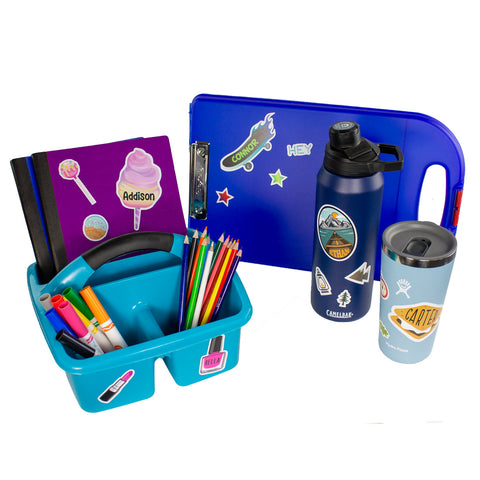
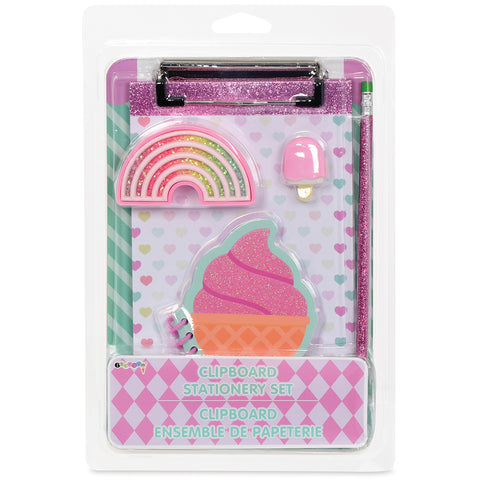
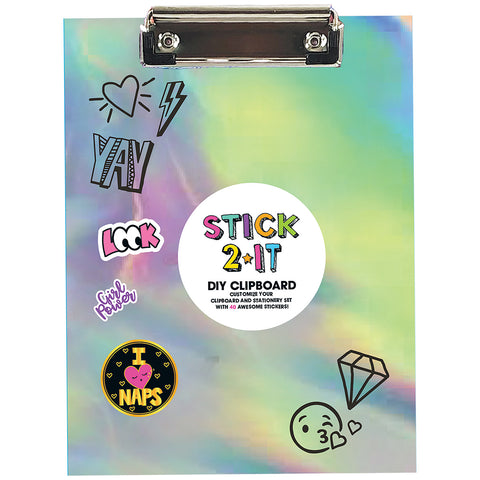
Clipboards and notepads round out the setup. A small clipboard lets campers write comfortably from their bunk without needing a hard surface and doubles as a storage spot for loose envelopes, stamps, and pre-addressed cards. How many items does your camper need? A good rule of thumb: enough for one or two outgoing letters per week, plus a few extras. Pre-address some envelopes before they leave, and pack stamps. The easier you make it, the more likely it is to happen.

Making It Easy and Fun to Write Home
The single biggest factor in whether a camper actually writes home? How easy you made it before they left. Here's the setup that works:
Before camp, sit down together and pre-address a stack of envelopes and postcards—home, grandparents, a best friend or two. Pick up self-sealing envelopes so humidity doesn't ruin them. Pack adhesive stamps. Write out a small address card they can reference if they want to write to someone not already covered. Tuck stickers in with the stationery so decorating envelopes feels fun rather than like a chore.
A clipboard keeps everything organized in the bunk and makes it easy to write anywhere. Camp notepads and scratch notes are low-pressure. A few lines is plenty. And postcards? A camper can bang one out in two minutes flat. When the bar is low, the letters actually get written.
FAQs About Camp Postcards and Stationery
It depends on your camper's writing habits. For reluctant writers, camp postcards are ideal—they're short, low-pressure, and fast to complete. For kids who enjoy writing, a stationery set with themed notecards and envelopes makes the experience feel more special. Most families do well packing a mix: a postcard pack for quick check-ins and a small stationery set for when they want to write a little more.
Beyond staying connected, writing letters helps campers process their experience—putting words to what they're seeing, doing, and feeling builds real cognitive and emotional skills. For parents, receiving a letter is one of the most reassuring things that can happen during a camp session. And years later, those letters become some of the best keepsakes from the whole camp experience.
Both serve different purposes. Postcards are for quick, easy outbound notes—great for campers who aren't big writers. Greeting cards are more personal and a little more occasion-worthy; parents often send them to their camper as a surprise mid-session. Packing a mix gives campers options and makes the whole correspondence experience feel more natural.
A good rule of thumb is one to two outgoing letters per week of camp, plus a few extras. For a two-week session, pack around 5–8 stamps and envelopes. Pre-address as many as you can before they leave—home, grandparents, close friends. Many camps do not sell stamps or stationery on-site, so pack more than you think you'll need.
A zippered plastic bag or a small pouch inside the trunk works well. Humidity is the enemy of envelopes and stamps—they'll stick together fast in a damp cabin if left loose. Self-sealing envelopes and adhesive stamps are worth the small upgrade for camp use. A clipboard with a storage clip keeps everything flat, organized, and protected.
A small clipboard doubles as both a writing surface and a storage spot—clip envelopes, stamps, and note cards right underneath. A single zippered pouch in the trunk top tray keeps everything in one place and easy to grab. The simpler the setup, the more likely it gets used.
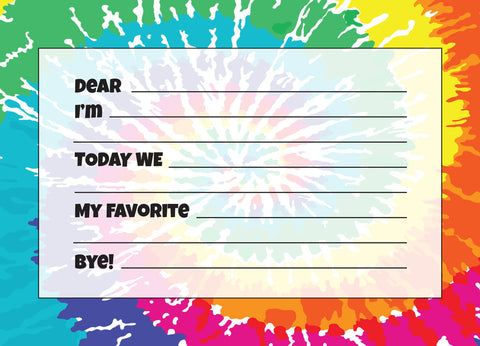
Call Me Cards are pre-printed cards that campers can fill out and mail home to request a scheduled phone call with their family—handy at camps where calls are limited or scheduled in advance. They give campers a simple, low-stress way to communicate when they want to hear a familiar voice, without having to navigate the camp's phone policy on their own.
Make it easy before they leave—pre-address envelopes, pack stamps, and set them up with a clipboard and a postcard pack. Let them know you'll be writing to them too, so they have something to respond to. Some families make it a fun challenge: write a letter to grandma and we'll plan something special when you're home. The bar doesn't have to be high—a two-sentence postcard counts. What matters is the habit.

